Hibiscus Studio
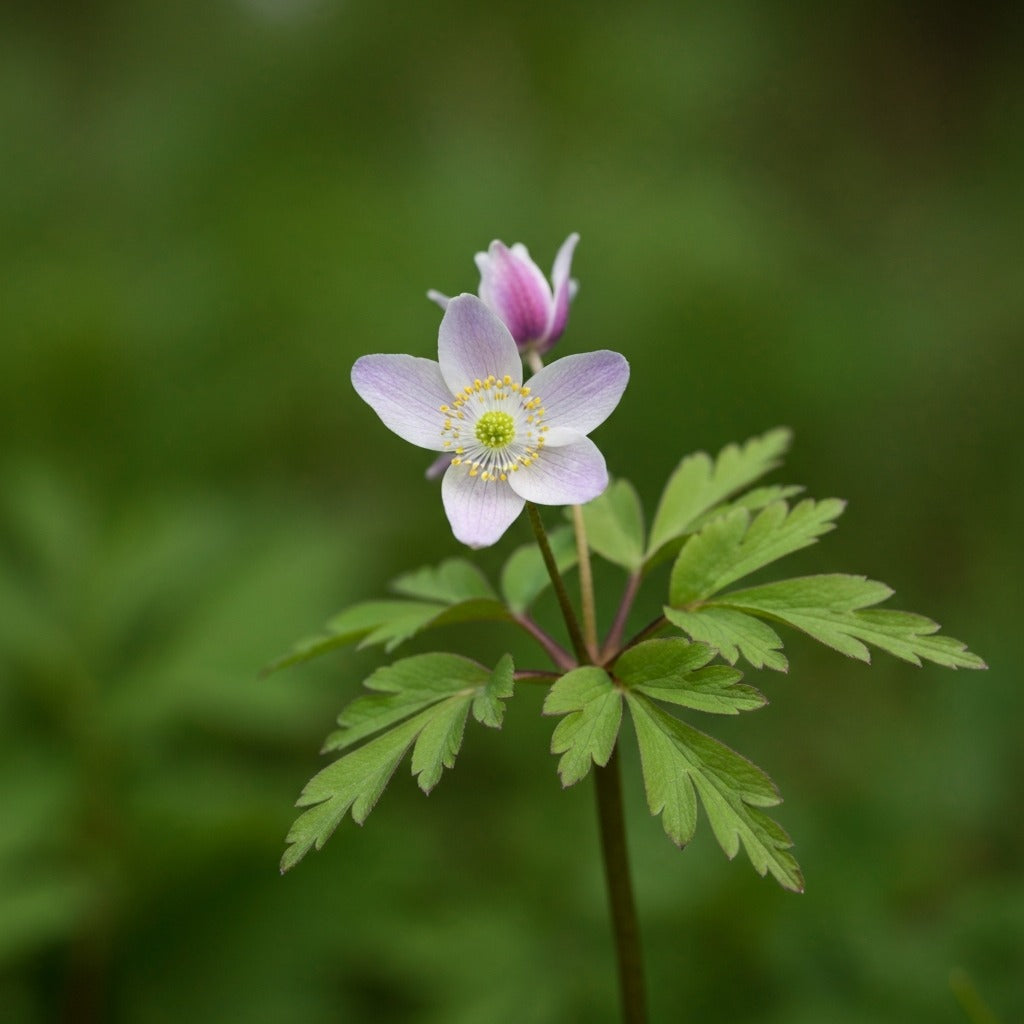
E1N2_Wood Anemone Botanical Water Bottle | Norway Native
E1N2_Wood Anemone Botanical Water Bottle | Norway Native
Couldn't load pickup availability
Flower Details
- Common name: Wood Anemone
- Country of origin: Norway
- Region: Europe
Bottle Specifications
- High-grade stainless steel
- 17 oz (500 ml)
- Dimensions: 10.5″ × 2.85″ (27 × 7 cm)
- Vacuum flask
- Double-wall construction
- Bowling pin shape
- Glossy finish
- Odorless and leak-proof cap
- Keeps liquids hot or cold for 6 hours
- Hand-wash only
About the Wood Anemone
Common name: Wood Anemone
Scientific name: Anemone nemorosa [POWO / Wikidata]
Native region: Europe and Asia [Wikipedia]
Featured origin: Norway
Plant height: A low, creeping woodland herb [Common botanical/general knowledge — no specific height range confirmed in verified sources]
Flower colour: White, sometimes flushed pale pink or lilac on the reverse of the petals [Common botanical/general knowledge]
Flowering season: Early spring — typically March to May in temperate Europe [Common botanical/general knowledge]
What It's Known For
- Anemone nemorosa belongs to the genus Anemonoides and is native across temperate Europe and Asia [Wikipedia]
- One of the earliest flowers to bloom each spring, emerging through leaf litter on the woodland floor before the tree canopy closes over [Common botanical/general knowledge]
- Spreads primarily through slow-moving underground rhizomes rather than seed dispersal, meaning a large colony can represent centuries of growth in a single location [Common botanical/general knowledge]
- In Norway and across Scandinavia, the Wood Anemone is a deeply recognised sign of spring's arrival, carpeting forest floors in white at the moment snow begins to retreat [Common botanical/general knowledge]
- All parts of the plant are mildly toxic, containing protoanemonin — a compound that has historically made it a plant to admire rather than handle carelessly [Common botanical/general knowledge]
- The name anemone derives from the Greek word for wind (anemos), and these flowers were traditionally associated with wind and the brevity of seasonal change [Common botanical/general knowledge]
- The plant is considered an ancient woodland indicator species — its presence in a forest is used by botanists and ecologists to identify woodland that has remained undisturbed for a very long time [Common botanical/general knowledge]
- Several closely related species exist across different continents: Anemonoides quinquefolia in North America and Anemonoides oregana in the western United States [Wikipedia]
The Story
The snow has only just left. The birch trees are bare, their pale trunks catching the flat Nordic light, and the forest floor is still matted with the brown debris of last autumn. Then — if you know to look for it — a shimmer appears. Not a single flower, but thousands of them, pushing up through the cold leaf litter as if they have been waiting all winter for exactly this moment. White, star-shaped, each one trembling at the slightest shift of air.
This is how spring announces itself in Norway.
The Wood Anemone, Anemone nemorosa, does not wait for warmth to be certain. It arrives at the edge of winter, trusting the lengthening days more than the temperature. In the deep forests of Norway and across temperate Europe, these flowers have been carpeting the woodland floor every March and April for as long as the forests themselves have stood. Botanists use the Wood Anemone as an indicator of ancient woodland — where you find it growing in number, you are standing in a place the forest has held undisturbed for centuries, perhaps longer. The plant spreads slowly through underground rhizomes, a colony of flowers widening by a handful of centimetres each year. A great sweep of Wood Anemones across a forest floor is not just beautiful. It is a record of time.
The name carries its own story. Anemone comes from the Greek anemos — wind. These flowers were named for the way they tremble and nod at the faintest breeze, as though they are in constant quiet conversation with the air around them. In old European traditions, the anemone was linked to transition and impermanence — the moment between seasons, between cold and warmth, between one thing ending and another beginning. In Norway, where winter is long and the return of light is genuinely felt, the appearance of the Wood Anemone on the forest floor is not merely decorative. It marks something real. People who grew up in Norwegian forests will tell you they remember the exact day each year they first spotted them — that flash of white through the trees on a walk they had made a hundred times before.
There is something worth holding onto in that: the idea that the most enduring things are not always the loudest or the most obvious. A flower that spreads an inch a year, that blooms for only a few weeks, that grows where the light touches the forest floor before the canopy closes over — and yet marks the oldest, most undisturbed ground in the landscape. Quiet, persistent, entirely itself.
That quality — arriving with the first real light, steady through the cold, belonging to a place in the deepest possible way — is why Hibiscus chose this story to travel with you.
What It Stands For
The Wood Anemone stands for quiet endurance — the kind that arrives before the season turns, marks the oldest ground, and asks for nothing in return.
The Perfect Gift
For the person in your life who loves the natural world — who has a soft spot for flowers, feels most at home outdoors, or simply appreciates a beautiful thing that means something real.
Give it for a birthday, a milestone, or any day that deserves a gift she'll actually use. Whether it goes on the trail, to the desk, or on the kitchen bench — it'll be reached for every single day. And every time she does, she carries a story from somewhere real, something that has lasted.
Not just a bottle. The whole story. She just gets to drink from it.
Share