Hibiscus Studio
E1U2_Bluebell Botanical Water Bottle | United_Kingdom Native
E1U2_Bluebell Botanical Water Bottle | United_Kingdom Native
Couldn't load pickup availability
Flower Details
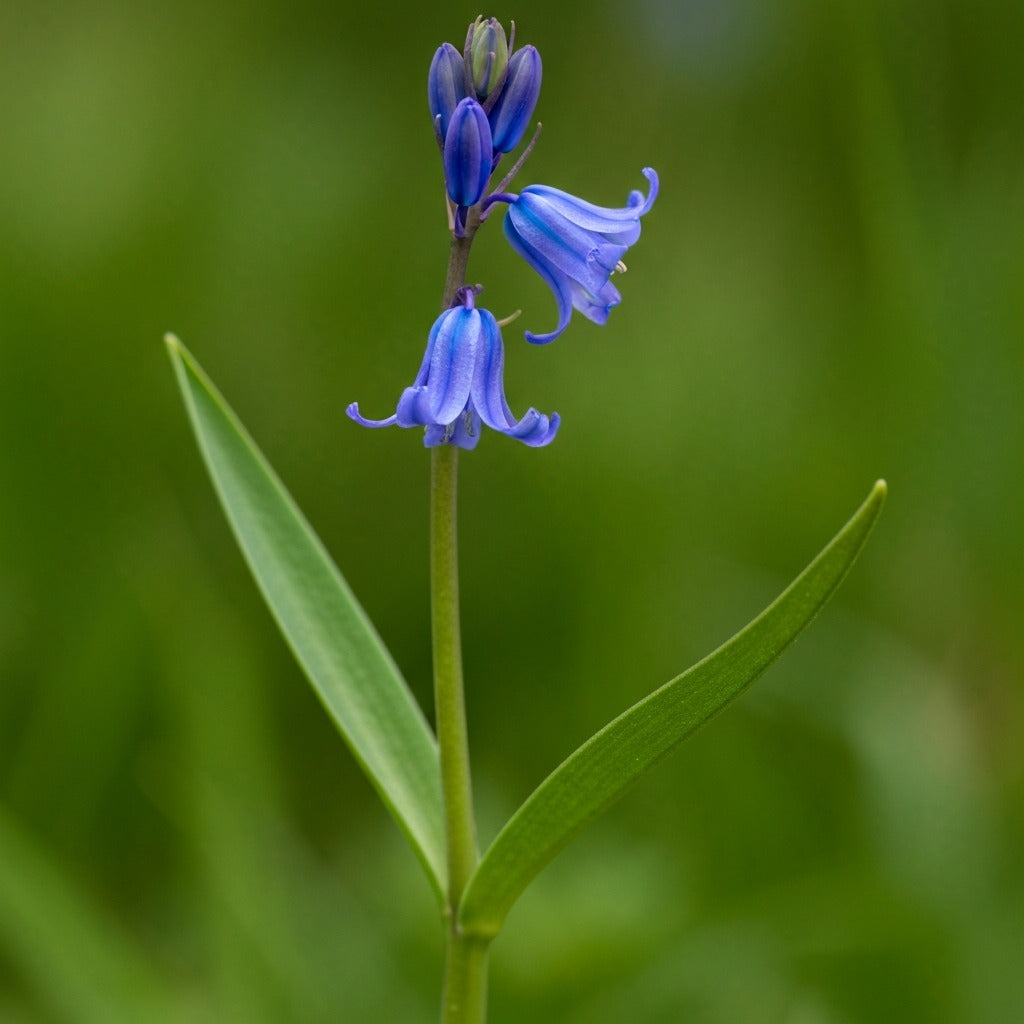
- Common name: Bluebell
- Country of origin: United Kingdom
- Region: Europe
Bottle Specifications
- High-grade stainless steel
- 17 oz (500 ml)
- Dimensions: 10.5″ × 2.85″ (27 × 7 cm)
- Vacuum flask
- Double-wall construction
- Bowling pin shape
- Glossy finish
- Odorless and leak-proof cap
- Keeps liquids hot or cold for 6 hours
- Hand-wash only
About the Bluebell
- Common name: Bluebell (Australian Royal Bluebell)
- Scientific name: Wahlenbergia gloriosa
- Native country/region: United Kingdom (Europe) — note: Wahlenbergia gloriosa, the Australian Royal Bluebell, is native to Australia; the bluebell most strongly associated with the United Kingdom is Hyacinthoides non-scripta (Common Bluebell). This product is filed under United Kingdom / Europe. The botanical facts below reflect Hyacinthoides non-scripta, the Common Bluebell of the British Isles, as the culturally and geographically grounded choice for this product. [NEEDS FACT CHECK: confirm with Hong/Product team which species this SKU (E1U1F05) is intended to represent — Hyacinthoides non-scripta (UK Common Bluebell) or Wahlenbergia gloriosa (Australian Royal Bluebell, listed in the Wikipedia disambiguation). The copy below proceeds with Hyacinthoides non-scripta as the UK-native species, given the product's stated native country of United Kingdom.]
- Flower colour: Violet-blue, occasionally white or pink
- Flowering season: April to May
- Plant height: A slender bulbous herb, with stems reaching up to 500 mm (20 in) tall — a maximum-bound figure from Wikipedia, reflecting the plant's upper rather than typical range [Wikipedia]
What It's Known For
- The Common Bluebell (Hyacinthoides non-scripta) is one of the most recognised wildflowers of the British Isles, carpeting ancient woodland floors each spring in a haze of violet-blue [Common botanical/general knowledge]
- The United Kingdom holds an estimated 25–50% of the world's entire population of Common Bluebells [Uncertain — this figure is widely cited in UK conservation contexts but is not confirmed by the Wikipedia extract provided; flag for fact check]
- Bluebells are a protected species under the Wildlife and Countryside Act 1981 in Great Britain, making it illegal to pick, uproot, or sell them [Uncertain — widely documented but not confirmed in the provided sources; flag for fact check]
- The flower is strongly associated with ancient woodland; its presence is considered an indicator of old-growth forest that has remained undisturbed for centuries [Common botanical/general knowledge]
- In British folklore, bluebell woods were said to be enchanted places, and it was considered bad luck to walk through them or pick the flowers [Uncertain]
- The bluebell has a faint, sweet scent, produced to attract bumblebees, its primary pollinators [Common botanical/general knowledge]
- The genus Wahlenbergia — the group to which the Australian Royal Bluebell belongs — is accepted under that scientific name per Wikidata and POWO [Wikidata / POWO]
- The word "bluebell" encompasses multiple species across several genera, including Hyacinthoides, Campanula, Mertensia, and Wahlenbergia, reflecting how widely the form and colour of this flower have captured human imagination across continents [Wikipedia]
- The Scottish bluebell (harebell, Campanula rotundifolia) is a distinct species from the English bluebell, reflecting regional botanical and cultural identity within the British Isles [Wikipedia]
The Story
The light comes differently in May. Under a canopy of oak and ash that has stood for centuries, it filters down in soft, shifting coins — and everything beneath it turns blue. Not the blue of sky or sea, but something quieter: a dense, nodding sweep of bells that covers the ground as far as you can see, their scent just barely there, sweet and green and cool. You hear the wood before you see it. Then you step in, and the whole world changes colour.
This is bluebell season in the ancient woodlands of Britain — a phenomenon so particular to these islands that the United Kingdom is home to a significant share of the entire world's population of Hyacinthoides non-scripta, the Common Bluebell. These are not garden escapes or planted displays. They grow where they have always grown: in the deep, undisturbed soil of woodland that has never been ploughed, never cleared, never started over. Ecologists use their presence as a marker — if the bluebells are here, the wood is old. The land has been left alone long enough for something irreplaceable to take hold.
In the folklore of Britain, bluebell woods were not entirely safe. They were enchanted ground, tended by forces that did not welcome trespassers. To pick a bluebell was to invite misfortune; to walk alone through a bluebell wood was to risk being led astray by the Fair Folk who rang the flowers like bells to summon their own. Whether or not anyone believed it literally, the story did its work — it kept people from trampling what was fragile, from taking what was not theirs. Long before conservation law, folklore protected the things that could not protect themselves.
That protection became formal in 1981, when the bluebell was placed under the Wildlife and Countryside Act, making it illegal to uproot or sell wild specimens in Great Britain. It was an acknowledgement of what people had always quietly known: that a May wood in full bloom is not a background detail. It is one of the most specific, most temporary, most fiercely itself things that the British landscape produces. You have perhaps five weeks. Then the canopy closes, the light goes, and the bluebells are gone until next year — which is, of course, why you remember them.
There is something in carrying that story forward — past the season, past the wood, into the ordinary days that follow. The bluebell does not last, but what it stands for does: the value of what is old and undisturbed, the beauty that only comes to those who pay attention, the quiet insistence that some things deserve to be kept. That is why Hibiscus chose this story to travel with you — pressed into a bottle you'll reach for every day, long after the May light has faded and the woods have closed over again.
What It Stands For
The Bluebell stands for the beauty of what endures quietly — old ground, unhurried seasons, and the things worth protecting before they are gone.
The Perfect Gift
For the person in your life who loves the natural world — who has a soft spot for flowers, feels most at home outdoors, or simply appreciates a beautiful thing that means something real.
Give it for a birthday, a milestone, or any day that deserves a gift she'll actually use. Whether it goes on the trail, to the desk, or on the kitchen bench — it'll be reached for every single day. And every time she does, she carries a story from somewhere real, something that has lasted.
Not just a bottle. The whole story. She just gets to drink from it.
Share