Hibiscus Studio
E1W1_Daffodil Botanical Water Bottle | Wales Native
E1W1_Daffodil Botanical Water Bottle | Wales Native
Couldn't load pickup availability
Flower Details
- Common name: Daffodil
- Country of origin: Wales
- Region: Europe
Bottle Specifications
- High-grade stainless steel
- 17 oz (500 ml)
- Dimensions: 10.5″ × 2.85″ (27 × 7 cm)
- Vacuum flask
- Double-wall construction
- Bowling pin shape
- Glossy finish
- Odorless and leak-proof cap
- Keeps liquids hot or cold for 6 hours
- Hand-wash only
About the Daffodil
- Common name: Daffodil
- Scientific name: Narcissus (genus, family Amaryllidaceae)
- Native country/region: Wales, Europe (widely associated as the national flower of Wales; native across much of Europe)
- Plant height: A low to upright bulbous herb, typically ranging from approximately 20 to 41 cm (8 to 16 inches) in height
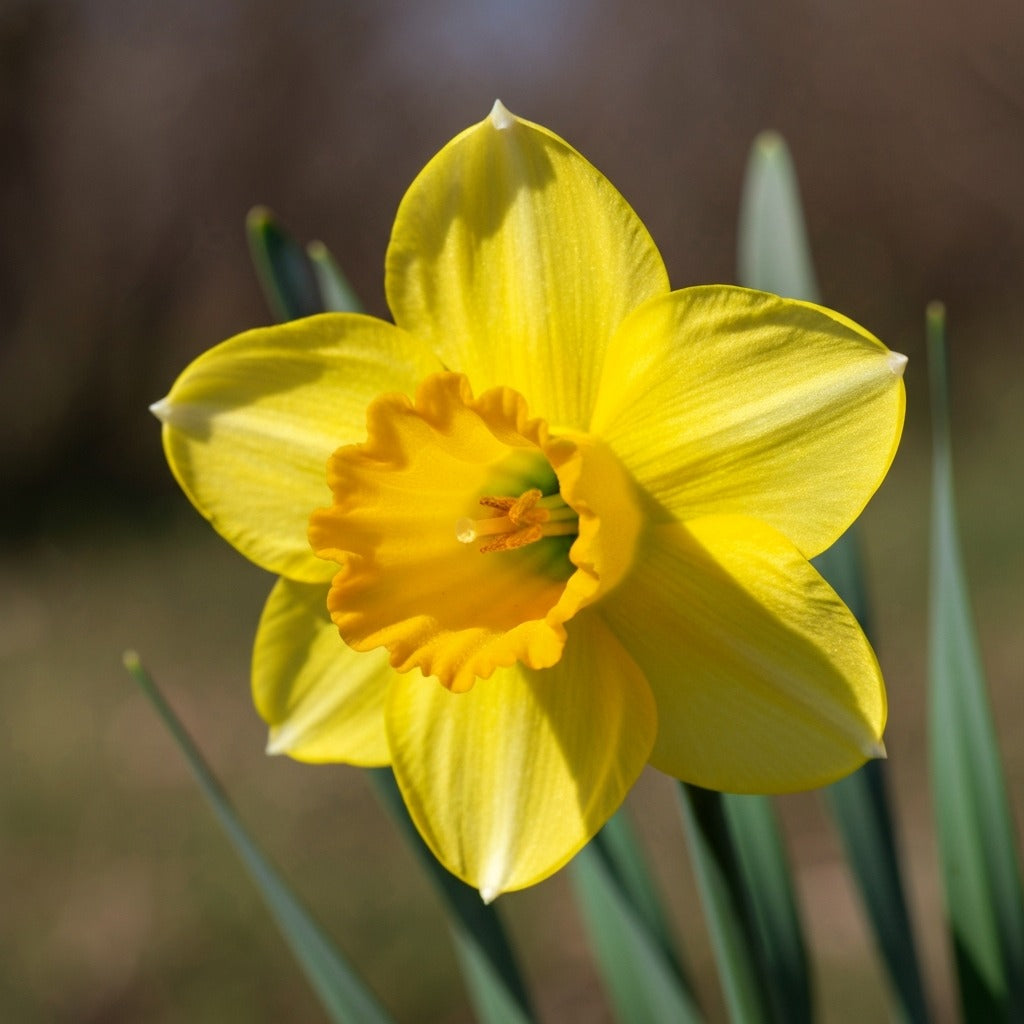
- Flower colour: Most commonly bright yellow; also found in white, cream, and bicolour forms
- Flowering season: Late winter to spring (typically February–April in the Northern Hemisphere)
What It's Known For
- The daffodil (Narcissus) is the national flower of Wales, traditionally worn on St David's Day, 1 March, to mark Wales's national day [Common botanical/general knowledge]
- The genus Narcissus belongs to the family Amaryllidaceae [Wikidata]
- Daffodils are bulbous perennials that return and multiply year after year, making them a symbol of renewal and persistence [Common botanical/general knowledge]
- All parts of the daffodil plant are toxic if ingested, containing alkaloids including lycorine — a defence mechanism that has helped the plant persist across millennia [Common botanical/general knowledge]
- The daffodil has been used in medical research; compounds derived from Narcissus species have been investigated in the context of Alzheimer's disease treatment [Uncertain]
- Daffodils are among the first flowers to bloom after winter across European landscapes, often pushing through snow or frost [Common botanical/general knowledge]
- The flower has deep roots in Welsh cultural identity, appearing regularly in poetry, song, and national ceremony [Common botanical/general knowledge]
- Narcissus has been cultivated ornamentally for centuries across Europe, and is widely grown in domestic gardens and cut-flower production throughout temperate regions [Common botanical/general knowledge]
- The name Narcissus connects to ancient Greek mythology, lending the flower a literary and symbolic presence that extends far beyond its botanical identity [Common botanical/general knowledge]
The Story
The hillsides of Wales turn gold before they turn green. In the final weeks of winter, before the hedgerows fill out and the lambs are old enough to run, the daffodils come — thousands of them, spilling down valley slopes and edging the old stone walls in long, bright lines. Slender-stemmed and seldom more than forty centimetres tall, each flower punches well above its modest height — it is one of the most reliable things in the Welsh year: cold air, grey skies, and then, without much warning, yellow everywhere.
Wales claimed the daffodil as its own long before it appeared on badges and lapels. The flower's connection to Welsh identity is ancient and layered — tied to the land itself, to the rhythms of a farming year that turned on seasons rather than calendars. St David's Day, celebrated on 1 March each year, became the occasion when the Welsh would wear the daffodil openly, a visible declaration of who they were and where they came from. It is still worn today, by schoolchildren and politicians alike, pinned to coats in late winter as the first real warmth begins to arrive. Few traditions in Europe carry that kind of unbroken thread — a flower worn in the same spirit, in the same season, across many generations.
The flower itself — the genus Narcissus, of the family Amaryllidaceae — carries older stories still. The Greek myth of Narcissus, the youth who fell in love with his own reflection and was transformed into a flower at the water's edge, gave the plant its name and embedded it in Western literature and art for centuries. Poets reached for it when they needed to speak about beauty, mortality, and the turning of time. Wordsworth's famous daffodils — seen on a walk beside a lake, dancing in the wind — became one of the most quoted images in the English language, a small yellow flower somehow containing the whole weight of spring.
What persists across all of these associations — the Welsh hillside, the national day, the poet on the lakeshore — is the same quality: arrival. The daffodil is never the flower of summer's abundance or autumn's harvest. It is always the first one, the one that comes before you were certain anything would come at all. It pushes through frost. It blooms in cold light. And then, almost immediately, it is gone — which is perhaps why it has always been treasured more than flowers that linger.
To carry a daffodil story is to carry something about beginnings — about the particular courage of arriving early, before the conditions are quite right, before anyone is sure the season has actually turned. That quiet persistence is what drew this flower to so many people across so many centuries, and it is why Hibiscus chose this story to travel with you.
What It Stands For
The Daffodil stands for arrival — the courage to bloom first, to bring colour before the cold has fully passed, and to mark where you come from with quiet, unshakeable pride.
The Perfect Gift
For the person in your life who loves the natural world — who has a soft spot for flowers, feels most at home outdoors, or simply appreciates a beautiful thing that means something real.
Give it for a birthday, a milestone, or any day that deserves a gift she'll actually use. Whether it goes on the trail, to the desk, or on the kitchen bench — it'll be reached for every single day. And every time she does, she carries a story from somewhere real, something that has lasted.
Not just a bottle. The whole story. She just gets to drink from it.
Share