Hibiscus Studio
N1U1_Bluebonnet Botanical Water Bottle | United_States Native
N1U1_Bluebonnet Botanical Water Bottle | United_States Native
Couldn't load pickup availability
Flower Details
- Common name: Bluebonnet
- Country of origin: United States
- Region: North America
Bottle Specifications
- High-grade stainless steel
- 17 oz (500 ml)
- Dimensions: 10.5″ × 2.85″ (27 × 7 cm)
- Vacuum flask
- Double-wall construction
- Bowling pin shape
- Glossy finish
- Odorless and leak-proof cap
- Keeps liquids hot or cold for 6 hours
- Hand-wash only
About the Bluebonnet
- Common name: Bluebonnet
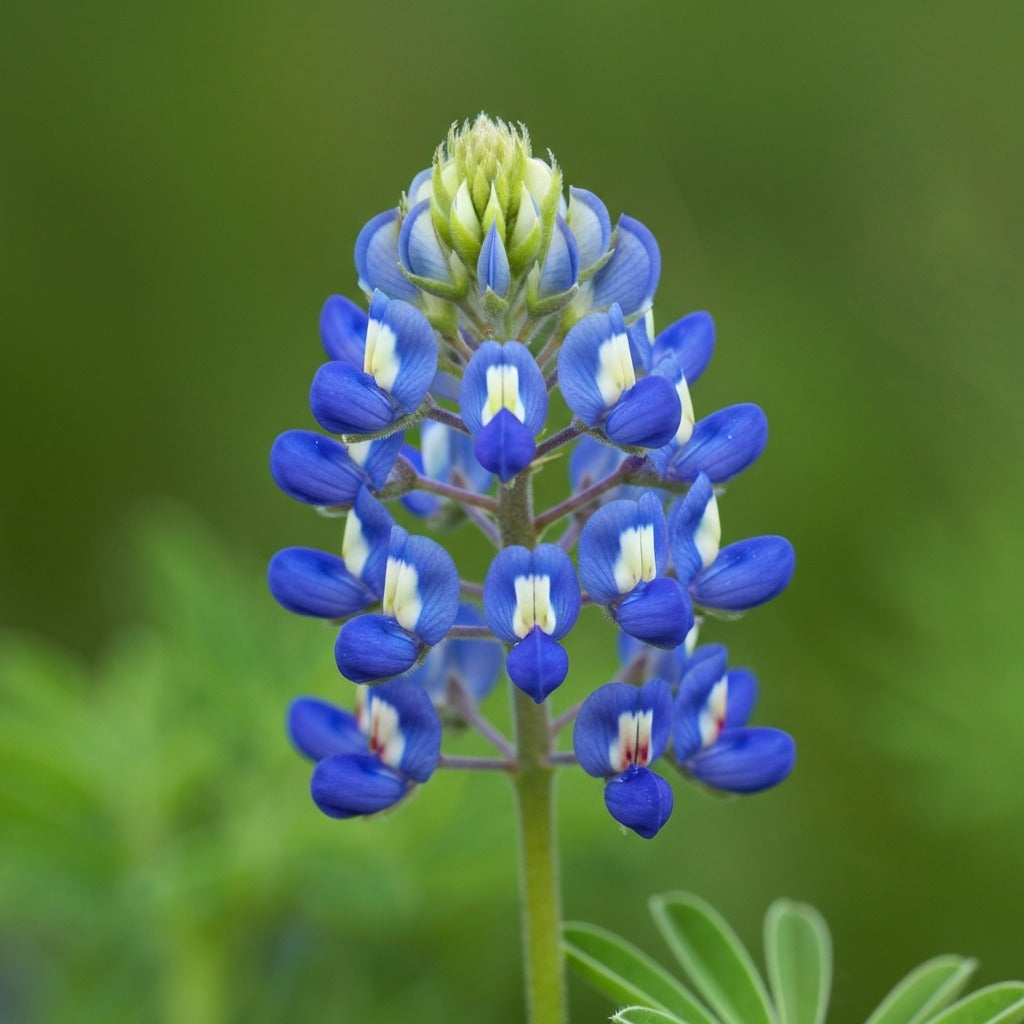
- Scientific name: Lupinus texensis (Texas Bluebonnet, the most recognised species) and related blue-flowered species of the genus Lupinus
- Native country/region: United States — primarily Texas and the broader southern Great Plains of North America
- Plant height: A low, bushy herb, typically growing 12 to 24 inches (1–2 feet) tall, with some specimens reaching up to 36 inches depending on conditions
- Flower colour: Deep violet-blue with a distinctive white or pale yellow spot at the centre of each petal
- Flowering season: Late winter to mid-spring, typically March through May in Texas
What It's Known For
- The Texas Bluebonnet (Lupinus texensis) is the official state flower of Texas, designated by the Texas Legislature in 1901
- The name "bluebonnet" is widely understood to refer to any number of blue-flowered Lupinus species native to the region [Common botanical/general knowledge]
- Bluebonnets are members of the legume family and fix nitrogen in the soil, improving the land they grow on [Common botanical/general knowledge]
- Each spring, Bluebonnets carpet roadsides and hillsides across Texas, drawing visitors and photographers from across the country [Uncertain — specific tourism figures not verified]
- The Texas Highway Department, and later TxDOT, actively encouraged planting Bluebonnets along state roadsides to promote their spread [Uncertain — widely repeated but not confirmed in verified sources]
- Photographing children in fields of Bluebonnets is a deeply embedded Texas springtime tradition [Common botanical/general knowledge]
- The flower holds deep cultural significance in Texas identity and is a recognised symbol of the state's landscape and character [Common botanical/general knowledge]
- Bluebonnets bloom en masse after adequate winter rainfall, making each year's display naturally variable and somewhat unpredictable [Common botanical/general knowledge]
The Story
Before the heat arrives — before the cedar and mesquite shimmer in a Texan summer haze — the land does something extraordinary. For a few weeks in late winter's exit, the roadsides, the rocky hillsides, and the open fields of central Texas turn a deep, improbable blue. Not the shy blue of a forget-me-not, not the pale wash of a summer sky. A saturated, pooling blue that looks, from a distance, like water lying still across the earth.
That blue belongs to the Bluebonnet. It has belonged to Texas since long before there was a Texas to belong to. Indigenous peoples of the region lived among these flowers for generations, and across many of the tribes of the southern plains, the Lupinus bloom was simply part of the rhythm of the year — the signal that winter had released its hold and the land was waking. When European settlers moved into the region in the nineteenth century, the flower was already there, already rooted, already marking the season. They gave it the name that stuck: the Bluebonnet, after the soft woollen hats worn by Scottish settlers and labourers, whose deep blue colour the petals seemed to echo.
In 1901, the Texas Legislature made it official. The Bluebonnet became the state flower — though the decision was not without debate. Other candidates were put forward: the cotton boll, the prickly pear cactus. The Bluebonnet won. It was, by any measure, the right choice. No other plant so visibly and so briefly transforms the Texan landscape. No other bloom so reliably brings people to the roadside — cameras raised, children set down in the middle of it, families arranging themselves against that impossible blue for a photograph they will keep for decades. This is a spring ritual in Texas, as fixed and expected as the season itself.
The flower's charm is partly in its transience. Growing no taller than one to two feet in most conditions, the Bluebonnet hugs the earth in low, spreading drifts — present enough to flood a hillside with colour, modest enough to vanish entirely when the season turns. It arrives in March, peaks in April, and by May the blue is gone and the land has returned to its usual palette of ochre and green. That brevity concentrates meaning. People drive hours to see a good year's bloom. They speak of it the way other regions speak of autumn leaves — as something that has to be caught, that rewards those who pay attention to the calendar of the natural world.
There is something worth carrying in that — the idea that beauty moves on a schedule of its own, that the people who notice it are the ones who show up. That attentiveness, that willingness to follow a season, is precisely why Hibiscus chose this story to travel with you. Every time you reach for this bottle, you carry a piece of a Texas April: that brief, saturated blue, the smell of warming earth, and the quiet knowledge that some things are worth going out of your way to see.
What It Stands For
The Bluebonnet stands for belonging — the fierce, unhurried pride of a place that marks its seasons in colour, and the people who stop long enough to notice.
The Perfect Gift
For the person in your life who loves the natural world — who has a soft spot for flowers, feels most at home outdoors, or simply appreciates a beautiful thing that means something real.
Give it for a birthday, a milestone, or any day that deserves a gift she'll actually use. Whether it goes on the trail, to the desk, or on the kitchen bench — it'll be reached for every single day. And every time she does, she carries a story from somewhere real, something that has lasted.
Not just a bottle. The whole story. She just gets to drink from it.
Share